Setting the file. One moment.
-
1
Install the package
Required
Install the PostHog Node.js library using your package manager:
npm
npm install posthog-nodeyarn
yarn add posthog-nodepnpm
pnpm add posthog-nodebun
bun add posthog-node -
2
Initialize PostHog
Required
Initialize the PostHog client with your project token:
Node.js
import { PostHog } from 'posthog-node' const client = new PostHog( '<ph_project_token>', { host: 'https://us.i.posthog.com' } ) -
3
Send an event
Recommended
Once installed, you can manually send events to test your integration:
Node.js
client.capture({ distinctId: 'distinct_id_of_the_user', event: 'event_name', properties: { property1: 'value', property2: 'value', }, }) -
4
Exception handling example
Required
Hono uses
app.onError(opens in a new tab) to handle uncaught exceptions. You can take advantage of this for error tracking.Remember to export your project token (opens in a new tab) as an environment variable.
index.ts
import -
Verify error tracking
Recommended
Confirm events are being sent to PostHog
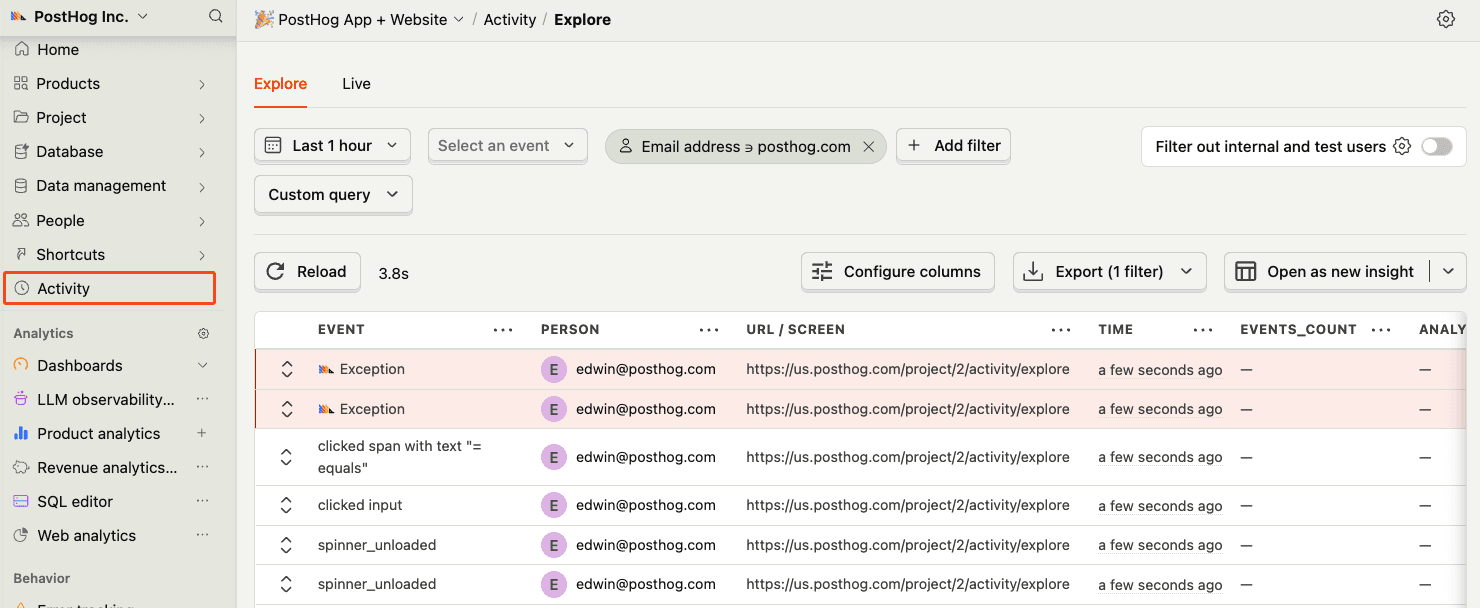
Before proceeding, let’s make sure exception events are being captured and sent to PostHog. You should see events appear in the activity feed.
-
5
Upload source maps
Required
Great, you’re capturing exceptions! If you serve minified bundles, the next step is to upload source maps to generate accurate stack traces.
Let’s continue to the next section.