Setting the file. One moment.
Verify error tracking
Recommended
Confirm events are being sent to PostHog
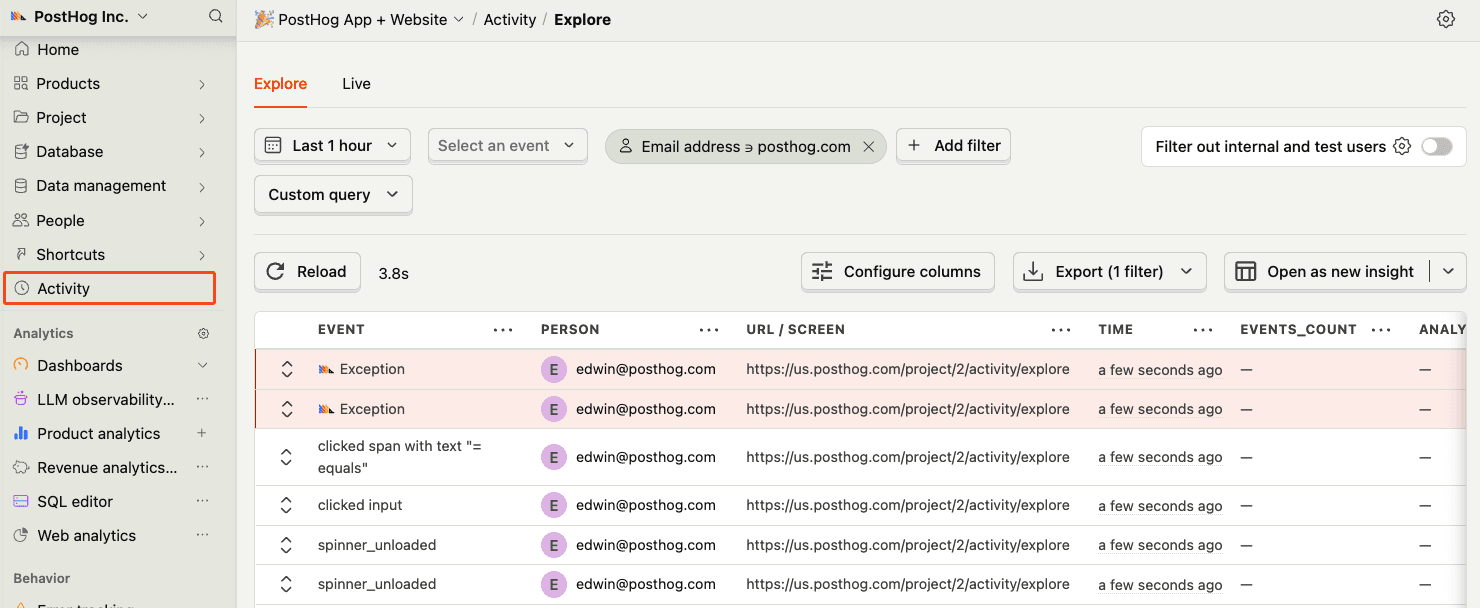
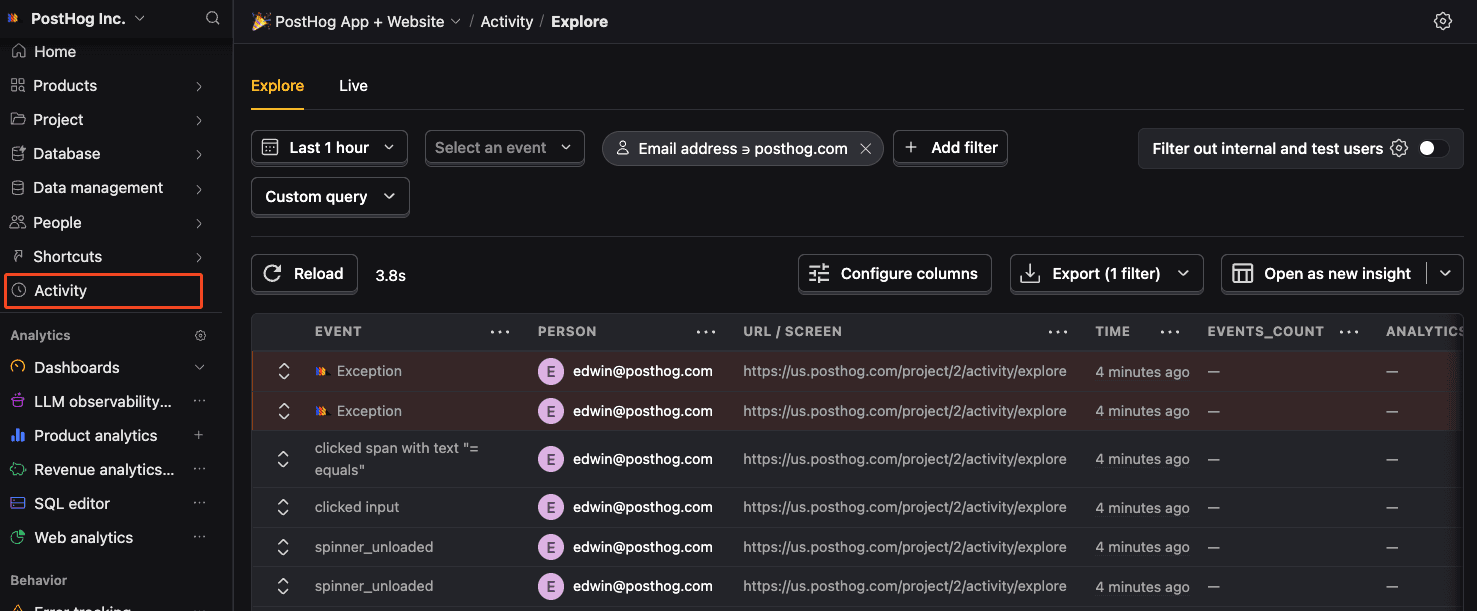
Before proceeding, let’s make sure exception events are being captured and sent to PostHog. You should see events appear in the activity feed.
Chapter 175 · Error Tracking React Native
Subchapter 175.5
references/react-native.mdMarkdown6 KBView on GitHub
Required
Install the PostHog React Native library and its dependencies:
PostHog AI
npx expo install posthog-react-native expo-file-system expo-application expo-device expo-localizationyarn add posthog-react-native @react-native-async-storage/async-storage react-native-device-info react-native-localize
# for iOS
cd ios && pod installnpm i -s posthog-react-native @react-native-async-storage/async-storage react-native-device-info react-native-localize
# for iOS
cd ios && pod install2
Required
PostHog is most easily used via the PostHogProvider component. Wrap your app with the provider:
App.tsx
PostHog AI
import { PostHogProvider } from 'posthog-react-native'
export function MyApp() {
    return (
        <PostHogProvider
            apiKey="<ph_project_token>"
            options={{
                host: "https://us.i.posthog.com",
            }}
        >
            <RestOfApp />
        </PostHogProvider>
    )
}
3
Recommended
Once installed, PostHog will automatically start capturing events. You can also manually send events using the usePostHog hook:
Component.tsx
PostHog AI
import { usePostHog } from 'posthog-react-native'
function MyComponent() {
    const posthog = usePostHog()
    const handlePress = () => {
        posthog.capture('button_pressed', {
            button_name: 'signup'
        })
    }
    return <Button onPress={handlePress} title="Sign Up" />
}
4
Recommended
Client-side configuration only
Support for remote configuration in the error tracking settings (opens in a new tab) requires SDK version 4.35.0 or higher.
You can autocapture exceptions by configuring the errorTracking when setting up PostHog:
React Native
PostHog AI
export const posthog = new PostHog('<ph_project_token>', {
  errorTracking: {
    autocapture: {
      uncaughtExceptions: true,
      unhandledRejections: true,
      console: ['error', 'warn'],
    },
  },
})
Configuration options:
| Option | Description |
|---|---|
| uncaughtExceptions | Captures Uncaught exceptions (ReactNativeGlobal.ErrorUtils.setGlobalHandler) |
| unhandledRejections | Captures Unhandled rejections (ReactNativeGlobal.onunhandledrejection) |
| console | Captures console logs as errors according to the reported LogLevel |
5
Optional
You can use the PostHogErrorBoundary component to capture rendering errors thrown by components:
React Native
PostHog AI
import { PostHogProvider, PostHogErrorBoundary } from 'posthog-react-native'
import { View, Text } from 'react-native'
const App = () => {
  return (
    <PostHogProvider apiKey="<ph_project_token>">
      <PostHogErrorBoundary
        fallback={YourFallbackComponent}
        additionalProperties={{ screen: "home" }}
      >
        <YourApp />
      </PostHogErrorBoundary>
    </PostHogProvider>
  )
}
const YourFallbackComponent = ({ error, componentStack }) => {
  return (
    <View>
      <Text>Something went wrong!</Text>
      <Text>{error instanceof Error ? error.message : String(error)}</Text>
    </View>
  )
}
Duplicate errors with console capture
If you have both PostHogErrorBoundary and console capture enabled in your errorTracking config, render errors will be captured twice. This is because React logs all errors to the console by default. To avoid this, set console: [] on errorTracking.autocapture (for example, errorTracking: { autocapture: { console: [] } }) when using PostHogErrorBoundary.
Dev mode behavior
In development mode, React propagates all errors to the global error handler even when they are caught by an error boundary. This means you may see errors reported twice in dev builds. This is expected React behavior and does not occur in production builds.
6
Optional
You can manually capture exceptions using the captureException method:
React Native
PostHog AI
try {
  // Your awesome code that may throw
  someRiskyOperation();
} catch (error) {
  posthog.captureException(error)
}
This is helpful if you’ve built your own error handling logic or want to capture exceptions that are handled by your application code.
7
Optional
We currently don’t support the following features:
These features will be added in future releases. We recommend you stay up to date with the latest version of the PostHog React Native SDK.
Recommended
Confirm events are being sent to PostHog
Before proceeding, let’s make sure exception events are being captured and sent to PostHog. You should see events appear in the activity feed.
8
Required
Great, you’re capturing exceptions! If you serve minified bundles, the next step is to upload source maps to generate accurate stack traces.
Let’s continue to the next section.
Ask a question
HelpfulCould be better